INTERVIEW
On the football pitch and in everyday life: advice from Rens Maljers, physiotherapist ⚽️
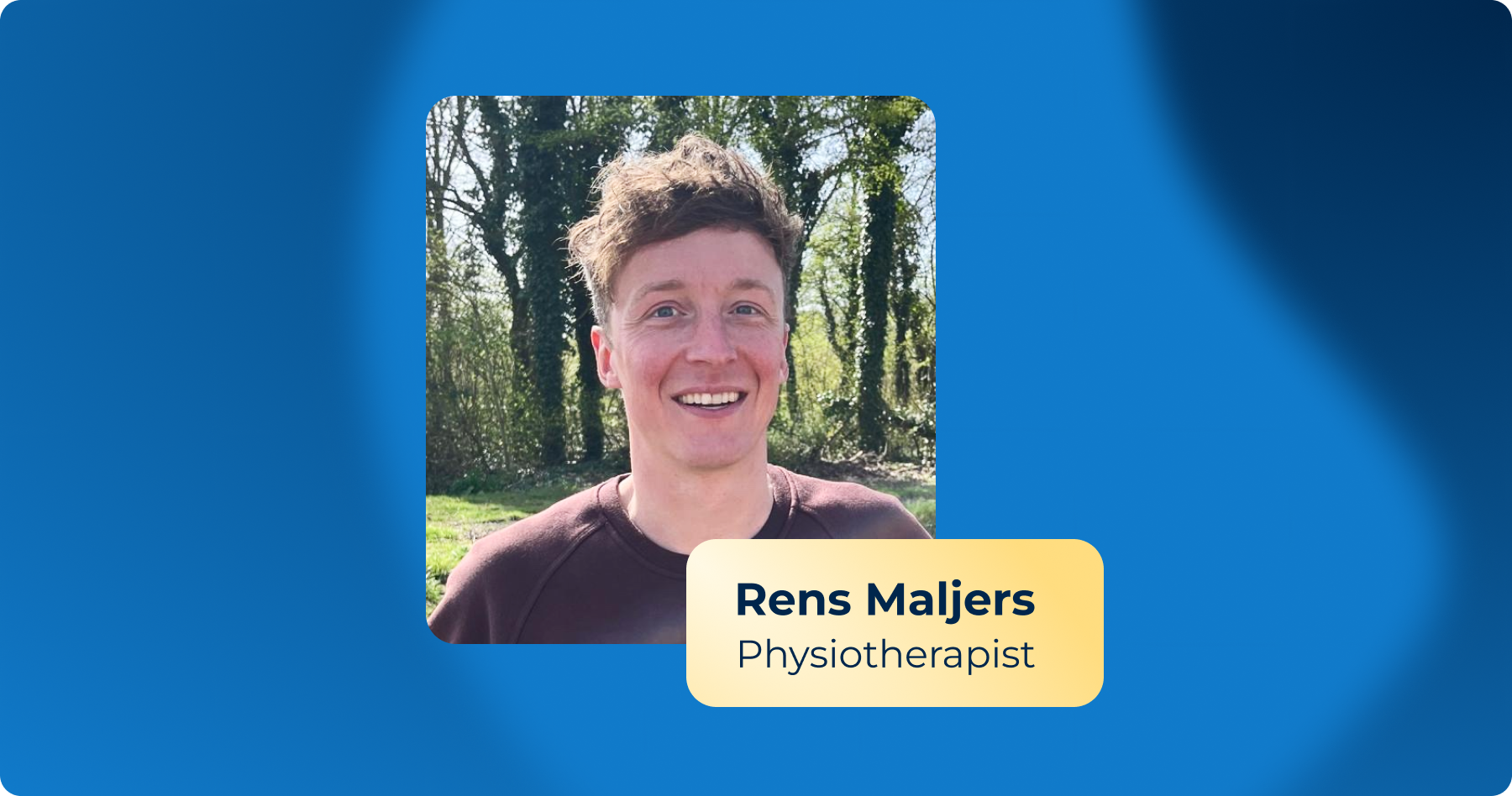
The perspective from a physiotherapist
To mark the FIFA World Cup, we spoke with Rens Maljers, the founder of Fysio Veere, a private physiotherapy practice in the Netherlands, where he also works as a physiotherapist. With 10 years of experience, he helps people of all ages recover from injuries, manage pain and return to an active lifestyle. His expertise ranges from sports physiotherapy and exercise-based rehabilitation to cardiovascular, pulmonary and Parkinson’s physiotherapy.
Drawing on an evidence-based approach, he combines personalised rehabilitation with injury prevention and long-term performance. In this interview, he shares his perspective on injury prevention, recovery management and the importance of collaboration between healthcare professionals to support patients every step of the way.
When the body takes the strain: the most common injuries
When asked about the conditions he sees most often in his practice, Rens Maljers points first to sports-related injuries. “The problems I encounter most often are tendon injuries, such as Achilles tendinopathy, patellar tendinopathy and rotator cuff injuries. I also frequently treat muscle strains, running-related injuries and overload injuries caused by increasing training load too quickly,” he explains.
Beyond the injuries themselves, Rens Maljers highlights that athletes’ motivation, while valuable, can sometimes work against them during recovery. “Athletes are often highly motivated, but that motivation can sometimes make it difficult for them to respect the recovery process,” he adds.
Too much, too soon… or not enough: finding the right balance
According to Rens Maljers, one of the most common mistakes happens when people return to physical activity after an injury. “The biggest mistake is either doing too much, too soon, or stopping all activity altogether. Complete rest is rarely the best solution, but returning to intensive training before the body is ready often leads to setbacks. The key is finding the right balance between recovery and gradually increasing training load.”

The advice he shares most often with his patients
Throughout his consultations, one message comes up time and again: recovery takes time. “Be patient and trust the process. Recovery is rarely linear. Small, consistent improvements over time are far more important than trying to achieve quick results.”
He also reassures patients about how they interpret pain. “I also remind my patients that pain doesn’t always mean there is tissue damage, and understanding that can often help reduce unnecessary worries.”
Better outcomes through teamwork
Working closely with other healthcare professionals is a key part of Rens Maljers’ approach. “I work closely with general practitioners, orthopaedic surgeons, sports physicians and podiatrists. Depending on the patient’s needs, I also collaborate with dietitians, psychologists and specialists in adapted physical activity.”
For Rens Maljers, this multidisciplinary approach plays an essential role in improving patient care. “Good communication between healthcare professionals leads to more effective treatment and a faster recovery.”
Better communication for better patient care
When asked which information is most important to share with other healthcare professionals, Rens Maljers emphasises the value of clear and ongoing communication. “Clear communication about the diagnosis, treatment goals, the patient’s progress and any barriers to recovery is essential. When everyone involved has access to the same up-to-date information, care becomes more effective and more consistent.”
He also believes that digital tools can make collaboration easier. “Digital communication platforms such as Doctolib Connect can support collaboration by making it faster, more secure and better organised, allowing healthcare professionals to focus on what matters most: the patient.”
His advice for the Dutch national team
If Rens Maljers were the physiotherapist for the Dutch national team during the World Cup, his advice would be simple: recovery deserves just as much attention as training.
“Give recovery the same importance as training. During a tournament, the margins are very small. Sleep, nutrition, hydration, recovery sessions and careful monitoring of training load are just as important as the matches themselves. Players who recover well perform better, stay fitter and significantly reduce their risk of injury throughout the competition.”